Skip to content

Oldest Shipwreck in Asia-Pacific

Godawaya

Discovered off Sri Lanka's southern coast, the Godawaya shipwreck is the oldest known shipwreck in the Indian Ocean, dating back over 2,000 years. Resting 33 metres beneath the sea, it reveals rare evidence of ancient trade, seafaring, and cultural exchange across the region.

Archaeological discovery

A 2,000 year old maritime mystery

2nd century BCE

Dating confirmed

Asia-Pacific

Oldest known wreck

Discovered in 2003 off the southern coast of Sri Lanka, the Godawaya shipwreck dates back to the 2nd century BCE, making it the oldest known shipwreck in the Asia-Pacific region.

Ancient trade connections

This remarkable archaeological find provides a rare glimpse into ancient maritime trade routes that connected Sri Lanka to Rome, China, and the Middle East. The vessel, likely an Indian or South Asian trading ship, was carrying a cargo that included hundreds of glass ingots and metal artifacts.

Follow the journey of discovery from the initial finding to the ongoing conservation efforts to preserve this invaluable piece of maritime heritage.

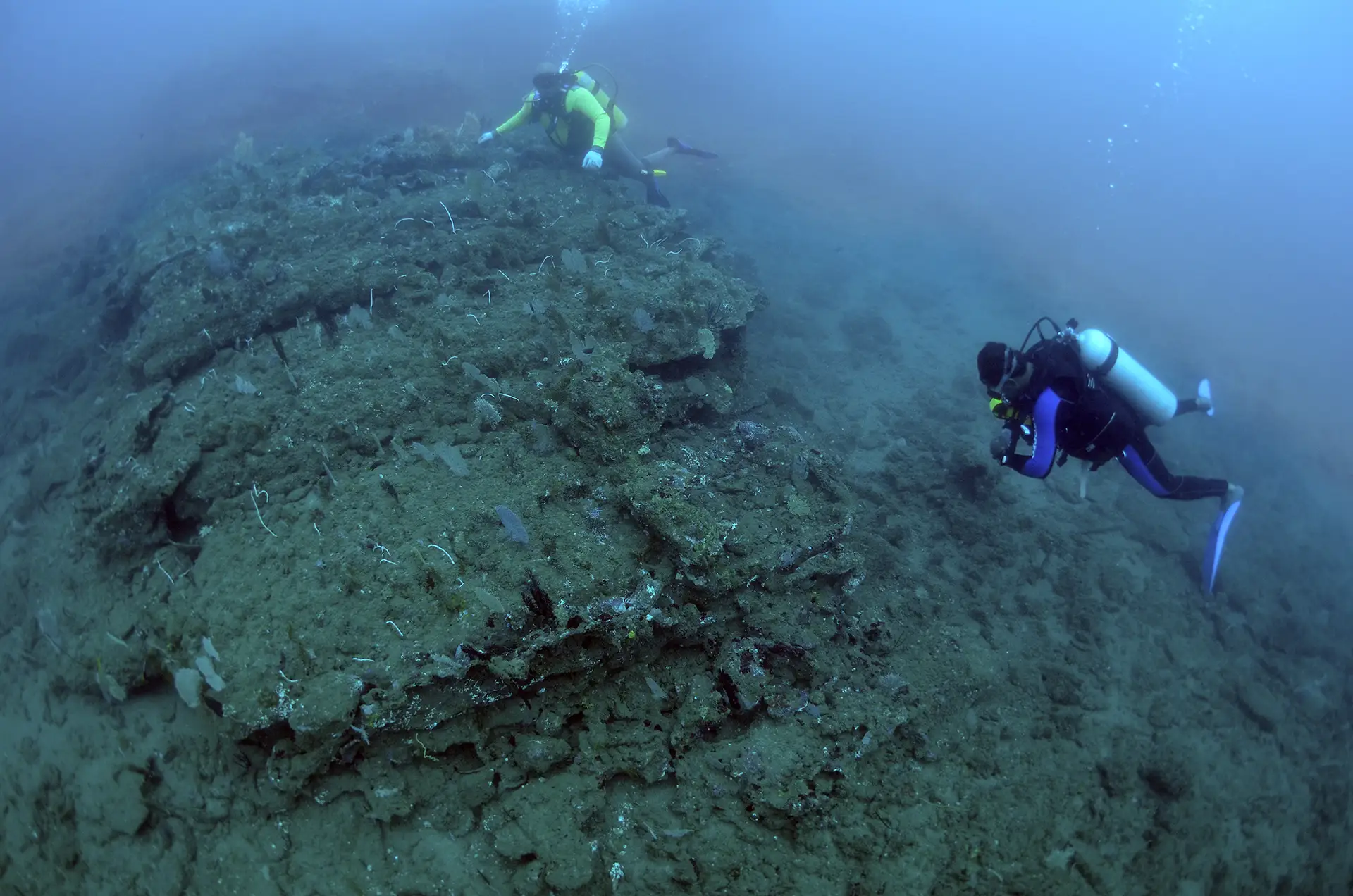
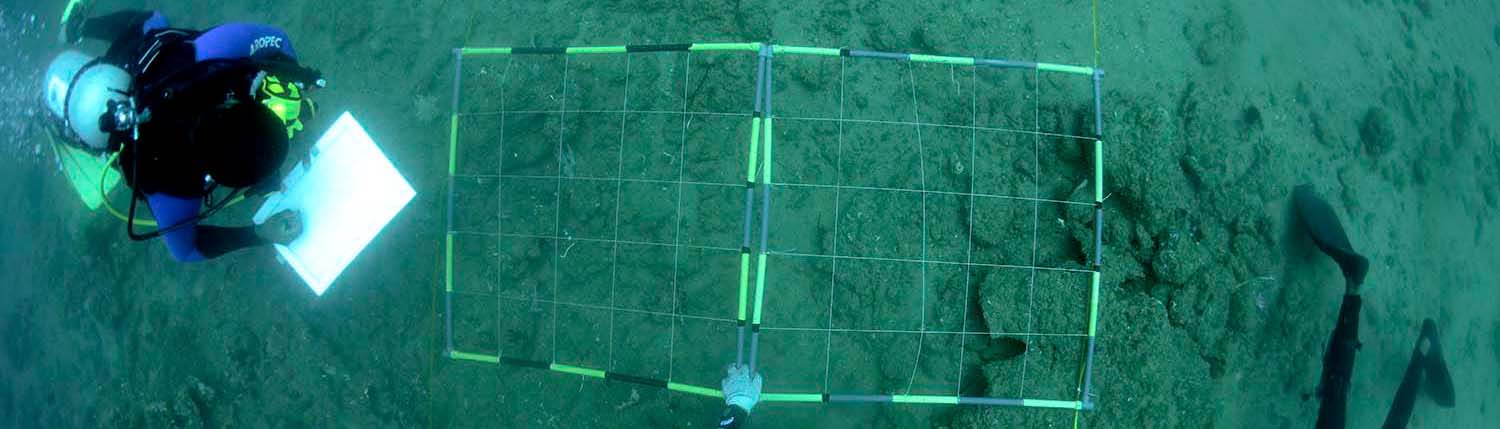
Godawaya shipwreck excavation
Underwater archaeology at the Godawaya site (courtesy of Maritime Archaeology Unit, Central Cultural Fund)

Archaeological timeline

Discovery timeline

The remarkable journey of uncovering Sri Lanka's oldest shipwreck

20+ years

Research period

International

Collaboration

Historic

Discovery

  1. 2003

    Initial discovery

    Archaeologists conducted an exploratory dive near Godawaya ancient port and discovered stone artifacts believed to be part of a shipwreck.

    Key discovery

    First archaeological evidence of an ancient shipwreck in southern Sri Lankan waters, located near the historically significant Godawaya port.

  2. 2008

    Preliminary survey

    The Maritime Archaeology Unit of the Central Cultural Fund conducted a preliminary survey of the site, mapping the wreck and documenting visible artifacts. The team confirmed the presence of a shipwreck with significant archaeological value.

    Site mapping

    Comprehensive underwater survey established the wreck's boundaries and identified priority areas for excavation.

  3. 2010–2012

    Excavation begins

    A joint Sri Lankan-German team began systematic excavation of the site, recovering glass ingots, pottery, and metal artifacts. Initial carbon dating suggested the wreck was approximately 2,000 years old.

    Major finds

    Hundreds of glass ingots, pottery sherds, and metal objects recovered during the first systematic excavation phase.

  4. 2013–2014

    Dating confirmation

    Advanced radiocarbon dating confirmed the wreck dates to approximately the 2nd century BCE, making it the oldest shipwreck discovered in the Asia-Pacific region and providing evidence of ancient Indo-Roman trade connections.

    Historic significance

    Officially recognised as the oldest shipwreck in the Asia-Pacific region, dating to the 2nd century BCE.

  5. 2015–2019

    Ongoing research

    Continued excavation and research revealed more about the ship's construction, cargo, and trading route. Analysis of artifacts provided insights into ancient glassmaking technology and maritime trade networks.

    Trade route analysis

    Scientific analysis revealed connections to ancient Roman glass production and Indo-Pacific trade networks.

  6. 2020–2026

    Conservation efforts

    Ongoing conservation work focuses on preserving recovered artifacts and monitoring the wreck site. The Godawaya shipwreck is now recognised as one of the most significant maritime archaeological discoveries in South Asia.

    Preservation

    Artifacts are being conserved and displayed at the Maritime Archaeology Museum, with ongoing site monitoring.

Geographic discovery

Key locations

Explore the important sites related to the Godawaya discovery

Godawaya ancient port

A historically significant harbour on Sri Lanka's southern coast, central to the wreck's discovery and maritime trade history.

Godawaya shipwreck site

Located approximately 4 km offshore at a depth of 33 metres — the oldest known shipwreck in the Asia-Pacific region.

Maritime Archaeology Museum, Galle

Recovered artifacts from Godawaya and other maritime excavations are conserved and displayed for public education.

Godawaya rock inscription

Ancient inscription near the port providing historical context for maritime activity in the region.

Research laboratory

Conservation and analysis facilities supporting ongoing study of artifacts from the Godawaya excavation.

Archaeological treasures

Notable artifacts

Discover the remarkable objects recovered from the ancient vessel

400+

Tools & objects

Preserved

In museum

Pottery

The pottery found at the Godawaya site shows similarities to those discovered in the excavations at Tissamaharama and Anuradhapura. Evidence belonging to eleven ancient pottery types has been identified across the country; from Godawaya, remnants corresponding to seven of these types have been uncovered.

Stone grinding tools

The grinding stones and hand stones found on the Godawaya ship are evidence of their importance as trade items in ancient Indian Ocean networks. Among the discovered grinding stones and hand stones, approximately five matched pairs can be identified, suggesting these items were specifically used for grinding purposes.

Metal objects

The copper objects from the Godawaya shipwreck represent a unique archaeological resource for understanding ancient metallurgical production and Indian Ocean trade. Archaeological proximity to the Akurugoda smelting site and the Seruwila ore deposit suggests a potential local link; however, current compositional evidence points towards a non-local source.

Discover shipwreck artifacts

MuseQR unlocks stories behind museum artifacts — including finds from the Godawaya shipwreck and other maritime excavations over the last three decades.

Explore artifacts on MuseQR

Research team

Excavation team

Meet the dedicated archaeologists and researchers behind this remarkable discovery

International

Collaboration

Academic

Excellence

Underwater

Expertise

  • Rasika Muthucumarana

    Maritime archaeologist

    Maritime Archaeology Unit, Central Cultural Fund

  • W.M. Chandraratne

    Maritime archaeologist

    Central Cultural Fund

  • Palitha Weerasighe

    Maritime archaeologist

    Central Cultural Fund

  • A.M.A. Dayananda

    Maritime archaeologist

    Central Cultural Fund

  • W.K. Sanath Karunarathne

    Maritime archaeologist

    Central Cultural Fund

  • Nandadasa Samaraweera

    Maritime archaeologist

    Central Cultural Fund

  • Amalka Wijesooriya

    Maritime archaeologist

    Central Cultural Fund

  • Kamal Zoysa

    Conservator

    Central Cultural Fund

  • Gamini Saman

    Conservator

    Central Cultural Fund

  • Rukshan Priyandana

    Maritime archaeologist

    Central Cultural Fund

  • Indika Hewage

    Maritime archaeologist

    Central Cultural Fund

  • Sameera Karunaratne

    Maritime archaeologist

    Central Cultural Fund

  • Nadeeka Kumari

    Maritime archaeologist

    Central Cultural Fund

  • Chamal Gamage

    Maritime archaeologist

    Central Cultural Fund

  • Jinali Ekanayake

    Maritime archaeologist

    Central Cultural Fund

  • Mahinda Karunaratne

    Maritime archaeologist

    Central Cultural Fund

  • Anusha Kasturi

    Conservator

    Central Cultural Fund

References & further reading

Academic publications and research papers on the Godawaya discovery

  1. Maritime Archaeology Unit (2013)
    The Godawaya Ancient Harbour: New Archaeological Evidence of the Sri Lankan Maritime Landscape. Journal of Maritime Archaeology, 8(1), 23–41.
  2. Muthucumarana, R., Gaur, A. S., Chandraratne, W. M., Manders, M., Rao, B. R., Bhushan, R., & Khedekar, V. D. (2014)
    An early historic assemblage offshore of Godawaya, Sri Lanka: evidence for early regional seafaring in South Asia. Journal of Maritime Archaeology, 9(1), 41–58.
  3. Rougeulle, A. (2015)
    The Sharma horizon: Sgraffiato wares and other glazed ceramics of the Indian Ocean trade (c. AD 980–1140). Proceedings of the Seminar for Arabian Studies, 45, 223–238.
  4. Tripati, S., & Gaur, A. S. (2017)
    Ancient maritime trade of the eastern Indian littoral. Current Science, 100(7), 1076–1086.
  5. Weerakkody, D. P. M. (1997)
    Taprobanê: Ancient Sri Lanka as known to Greeks and Romans. Brepols Publishers.

Explore more maritime heritage

Discover other shipwrecks and underwater archaeological sites in Sri Lanka's waters through our interactive database.

115

Shipwrecks

2000+

Artifacts

2200+

Years of history