Archaeological timeline
Chronology of Research at the Godawaya Shipwreck
A detailed record of discovery, excavation, and conservation from 2003 to the present
-
2003
Two local conch divers accidentally discovered an assemblage of pottery in deep water off Godawaya. They recovered several pottery fragments and a bench-shaped stone object, which was subsequently handed over to officers of the KAVA Project (the joint Sri Lankan–German archaeological project of the Department of Archaeology). During the same year, fishermen operating near the Godawaya Fisheries Harbour discovered a triangular-shaped ancient stone anchor, providing further evidence for the existence of an ancient port in the area.
-
2004–2008
Large quantities of copper ingots were illegally removed from the shipwreck by divers and fishermen and sold as scrap metal, resulting in the loss of a significant portion of the archaeological assemblage.
-
2008
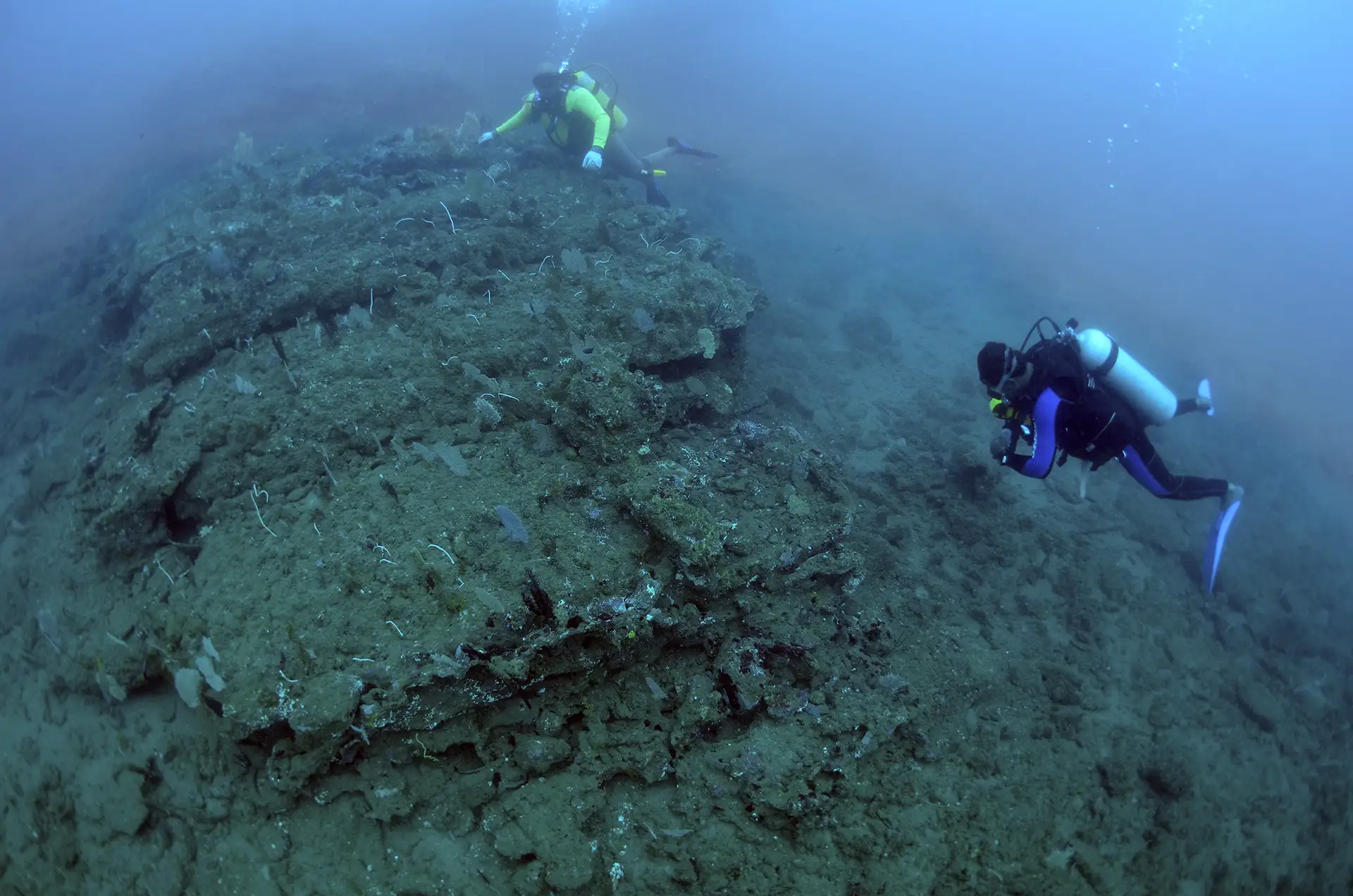
The first systematic underwater archaeological investigation was conducted by the Central Cultural Fund (CCF), the Department of Archaeology, and the Sri Lanka Navy. The survey identified scattered artefacts, pottery, glass ingots, and a large concretion-covered mound. The site was archaeologically confirmed as the remains of a wooden shipwreck. Comparative studies were initiated on grinding stones recovered from Yatala and Godawaya. During the field season, a serious diving incident occurred when three divers were swept away by strong currents and drifted from the site. Although they were successfully rescued after several hours, diving operations were temporarily suspended.
-
2009
The first international publication on the Godawaya shipwreck was released through the AIMA Newsletter, confirming the discovery of what was then considered the oldest known shipwreck in the Asia-Pacific region. The publication discussed the comparative dating of pottery recovered from the wreck and other archaeological features. Pottery analysis suggested a date between the 4th and 2nd centuries BCE.
-
2010
In November, an assessment was conducted to determine whether the construction of Hambantota Harbour had affected the wreck site. Observation dives confirmed that no damage had occurred. In December, a non-disturbance survey was undertaken with the participation of six maritime archaeologists from Indonesia, Malaysia, the Philippines, and India. The project was supported by the Cultural Heritage Agency of the Netherlands (RCE) and UNESCO Bangkok. Mapping, photography, and site planning were completed, while wood, ceramic, and glass samples were collected for analysis. During the same period, maritime archaeologists from the Institute of Nautical Archaeology (INA) visited the site and obtained samples for scientific dating. Radiocarbon dating and pottery studies indicated a date between the 2nd and 1st centuries BCE.
-
2011
Additional non-invasive surveys were conducted jointly by the Department of Archaeology, the Central Cultural Fund, and the Institute of Nautical Archaeology.
-
2012
A formal collaboration agreement was signed between the Department of Archaeology and the Institute of Nautical Archaeology (Texas A&M University). Radiocarbon dating results confirmed that the shipwreck dated to approximately 200–40 BCE. The Godawaya shipwreck was subsequently recognized as the earliest known shipwreck in the Indian Ocean.
-
2012–2013
The first large-scale excavation was undertaken by the Department of Archaeology and INA. Excavations recovered copper and iron bars, glass ingots, pottery fragments, and grinding stones. All recovered artefacts underwent desalination and conservation treatment. Scientific analyses confirmed the nature of the copper and iron cargo and investigated the provenance of the glass materials.
-
2014
Between February and May, a major excavation campaign was carried out using INA's Nitrox diving system. The excavation recovered grinding stones, a bronze spearhead, a metal ring, a blue glass disc, and pottery fragments, providing valuable information on the ship's cargo and chronology.
In April, the Government of Sri Lanka suspended diving operations following concerns regarding the management of research activities and the role of foreign participation in the project. As a result, foreign involvement ceased and fieldwork came to a temporary halt.
-
2017
Research resumed after a three-year interruption. The Maritime Archaeology Unit (MAU) and the Department of Archaeology successfully conducted site exploration and documentation through photography, videography, and measured drawings. Baseline records were established for future mapping and monitoring, although no artefacts were recovered during this season.
-
2018
The MAU resumed excavation activities to investigate site formation processes and ship construction technology. This field season resulted in the first underwater discovery of carnelian beads from a shipwreck in Sri Lanka. Twenty-one artefacts were recovered, including copper fragments, beads, and pottery. Extensive mapping and recording were undertaken despite difficult sea conditions.
-
2019
Trench excavations were discontinued and the focus shifted towards conservation-oriented recovery and documentation. Sixty-six artefacts, including grinding stones, a copper handle, beads, and pottery, were recovered during the season. Maritime archaeologists from the National Research Institute of Maritime Cultural Heritage (NRIMCH), South Korea, participated in the fieldwork.
-
2021
Research activities continued despite financial challenges caused by the COVID-19 pandemic and the decline of tourism-related funding. Activities included inspection dives, seabed sampling, manual site recording, and photogrammetric documentation. Thirteen artefacts were recovered, including grinding stones, handstones, copper fragments, and pottery.
-
2022
The project received funding through the U.S. Ambassadors Fund for Cultural Preservation (AFCP), and a formal agreement was signed between the Central Cultural Fund and the U.S. Embassy in Sri Lanka. The award significantly expanded the project's fieldwork, documentation, and conservation capacity. Detailed site measurements, photography, videography, and scientific sampling were carried out during the field season.
-
2023
With AFCP support, the field season was extended to five months. Extensive documentation and conservation activities were completed, while excavations recovered thirty-three artefacts, including handstones, copper handles, pottery, and beads. Significant progress was also made in the conservation and documentation of previously recovered materials.
-
2024
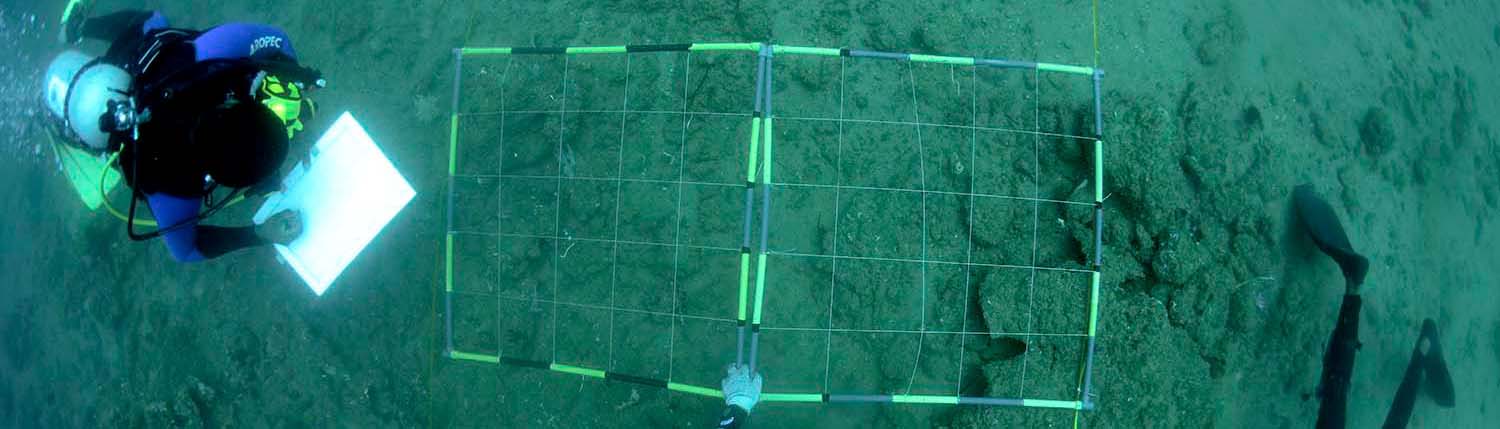
Between February and April, fieldwork was conducted successfully, revealing important new information about the shipwreck and its cargo distribution. The 2 × 2 m grid recording system was continuously employed for detailed archaeological drawings, while cross-sections were prepared to document the three principal mounds and associated hull remains. Excavations recovered copper ingots, grinding stones, handstones, beads, complete pottery vessels, and large fragments of storage jars. During this period, U.S. Ambassador Julie Chung visited the project and dived at the Godawaya shipwreck site.
Between November and December, excavation and documentation continued using hand-fanning techniques. The surrounding archaeological landscape was also surveyed to better understand the broader trade and cargo context of the wreck. Investigations into the historic looting of copper ingots estimated that approximately 5,000 kilograms of copper may have been removed from the site between 2003 and 2008. AFCP funding support was subsequently extended through 2025.
-
2025
Excavation and documentation continued using the 2 × 2 m grid recording system. Underwater sketches, detailed drawings, photography, videography, and photogrammetric recording were further expanded. The season yielded sixty-one artefacts, including a glass earring or pulley, symbol-marked grinding stones, handstones, copper handles, beads, and pottery. A metal-detector survey identified several areas containing concentrated metal remains. Maritime archaeologists from Japan and the Philippines participated in the fieldwork and research programme.
During the same year, recovered artefacts, research findings, and new discoveries from the Godawaya shipwreck were presented to the public and academic community for the first time through a three-day exhibition and research symposium held at the BMICH, Colombo. Organized by the Maritime Archaeology Unit and the Central Cultural Fund with the support of the U.S. Embassy, the event attracted thousands of visitors. The project's first major publication, Godawaya: Edited Volume, was also launched as a Central Cultural Fund publication produced under AFCP funding.
-
2026
Between February and April, systematic excavations commenced in the central section of the wreck, particularly between Mounds 01 and 02 where the copper ingots had originally been stored. Additional 2 × 2 m excavation units were opened in selected areas of the site. Cross-sections were recorded across excavation trenches and between the principal mounds to better understand site formation processes and hull preservation. Excavations recovered beads, metal objects, glass ingots, and pottery for further study. Scientific sample analysis programmes were initiated in collaboration with the Sri Lanka Atomic Energy Board, SLINTEC, the Industrial Technology Institute (ITI), and the Postgraduate Institute of Archaeology (PGIAR).