

Hambantota
Godawaya Wreck
SL/S/GODA/M/06
- Period
- Historical
- Year sunk
- -200
- District
- Hambantota
- Depth
- 31.00–33.00 m
- Vessel type
- Wooden Sail, Bulk Carrier
Overview
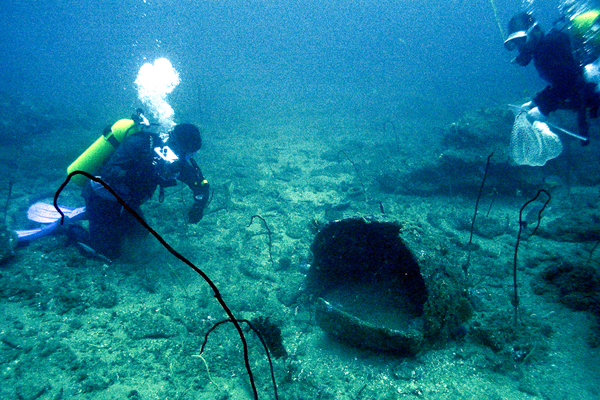
The wooden shipwreck site known as the "Godawaya" shipwreck is the oldest known shipwreck found in the Asia-Pacific region. It is nearly 2,200 years old (2nd century BCE) and situated between Godawaya and the Hambantota sea area. The site was discovered in 2008 by the Maritime Archaeology Unit (MAU) of the Central Cultural Fund, following the trail of two local divers. The wreck is lying on a flat seabed at a depth of 32 meters, which is a considerable depth, creating limitations for fieldwork. The investigations done so far have uncovered the value of this historical wreck, identifying it as a trading vessel full of cargo. This wreck undoubtedly carries a significant amount of information on the Indian Ocean trade and the evidence of shipbuilding traditions of a seagoing vessel of that era.
The majority of the artifacts found at the site are pottery. That includes various types of clayware, from large storage jars to small intake wares. All of them were scattered around the two main mounds, identified as the wooden hull remains of the wreck. Apart from jars and potsherds, artifacts uncovered since 2008 included stone querns, several cylindrical grinding stones, round and flat beads, and fragments of several metal objects such as bowls and spearheads. Most of the pottery and the unused stone querns found with grinding stones can be surmised to have been part of the cargo.
Apart from those items, it could be seen that a considerable quantity of raw materials was also transported aboard the ship. There is little doubt that the hemispherical blue-glass ingots and copper were also part of the cargo. Remains of iron from the site indicate that iron would have been transported as ingots. Further analysis is needed to confirm this proposition.
The initial investigation into the shipwreck site was started in 2008. Samples of artefacts such as clay pottery, glaze ingots, quern stone, and some copper lumps were collected. Typological analysis of the pottery found at the site suggests an age for the ship that can be dated to the 2nd century. These findings were first published in 2009 in the AIMA Newsletter, Australia. Samples from the site were subjected to C14 dating in 2011 and obtained a similar date range. This was published in Current Science Magazine in 2012. With this date, the Godawaya shipwreck became the oldest shipwreck site in the Asia-Pacific region.
With the fieldwork completed in 2017 and 2018, the whole site and some of the significant features (artefacts and parts of the ship) of the site were recorded using the 3D photogrammetric technique (Image 043). A site plan was also compiled using available equipment and measurements. Yet, there are more artefacts and more information that should be included on the map for it to become a comprehensive archaeological recording of the site.
The Central Cultural Fund managed to gather the necessary funds for the project and for the large-scale excavation in 2019. An excavation trench was laid across the wreck and another one from the south side, near mound 01. With those excavations, we could obtain a more comprehensive understanding of the site and we could locate more artefacts under the sand than we expected. Nearly 100 special objects/artefacts were collected from the excavation. Those were mainly potshards, quern stones, beads, copper and metal objects. This collection of artifacts from the site probably represents a sample of objects that comprised the cargo that was on board the ship and it also, probably, indicates the nature of the international sea trade of that time in the region.
Media gallery
·
Location
Exact location withheld to protect this protected site.
For heritage protection, precise coordinates are not published for this site. Only the general administrative area is shown.
Hambantota, Southern
Protection & status
- Access
- Yes
- Legal status
- Protected by Arch Act
- Archaeological value
- High
- Physical protection
- None
- Degradation
- Very Fragile
- Owner terrain
- Dept of Archaeology
- Owner site
- Department of Archaeology
- Authority
- DOA & MAU-CCF
- Authority
- Sri Lanka Navy
- Authority
- Merchant Shipping Secretariat
- Threat
- Looting
- Threat
- Deterioration
Vessel chronology
-200
Year sunk
Artefacts
-
SL/S/GDV/2018/001
Pottery · Clay
-
SL/S/GDV/2018/021
Pottery · Clay
-
SL/S/GDV/2018/003
Pottery · Clay
-
SL/S/GDV/2018/004
Pottery · Clay
-
SL/S/GDV/2018/005
·
-
SL/S/GDV/2018/006
· Led
-
SL/S/GDV/2018/007
· Led
-
SL/S/GDV/2018/008
· Led
-
SL/S/GDV/2018/009
Disc beads · Carnelian
-
SL/S/GDV/2018/010
Disc beads · Carnelian
-
SL/S/GDV/2018/011
Disc beads · Carnelian
-
SL/S/GDV/2018/012
Sperical beads · Carnelian
-
SL/S/GDV/2018/013
Sperical beads · Carnelian
-
SL/S/GDV/2018/014
Rim · Iron
-
SL/S/GDV/2018/015
Rim · Copper
-
SL/S/GDV/2018/016
Sperical beads · Carnelian
-
SL/S/GDV/2018/017
Sperical beads · Carnelian
-
SL/S/GDV/2018/018
Disc beads · Carnelian
-
SL/S/GDV/2018/019
Disc beads · Carnelian
-
SL/S/GDV/2018/020
Sperical beads · Carnelian
References & publications
- මුතුකුමාරණ රසික (2009) ශ්රී ලංකාවේ පැරණිතම නෞකාව ගොඩවාය මුහුදු පත්ලෙන් මතුවෙයි, දළනිඳු, විද්යුත් පුවත් සරණිය, වෙලුම 01, කාණ්ඩය 01, ඔක්තෝබර් 2009, මුහුදු පුරාවිද්යා ඒකකය, මධ්යම සංස්කෘතික අරමුදල
- නන්දදාස එස්.එම් (2010) ශ්රී ලංකාවේ ග්ලේස් භාවිතය හා ගොඩවාය මුහුදින් හමු වූ ග්ලේස් කුට්ටි, දළනිඳු, විද්යුත් පුවත් සරණිය, වෙලුම 02, කාණ්ඩය 01, ජනවාරි 2010, මුහුදු පුරාවිද්යා ඒකකය, මධ්යම සංස්කෘතික අරමුදල
- සනත් ඩබ්.කේ (2010) ගොඩවාය මුහුදු පත්ලෙන් හමුවන බෞද්ධ සලකුණු , දළනිඳු, විද්යුත් පුවත් සරණිය, වෙලුම 02, කාණ්ඩය 02, අප්රේල් 2010, මුහුදු පුරාවිද්යා ඒකකය, මධ්යම සංස්කෘතික අරමුදල
- ගොඩවාය පුරා ක්ෂේත්රය - සංස්කෘතික සහයෝගිතා වැඩසටහන, දළනිඳු, විද්යුත් පුවත් සරණිය, වෙලුම 03, කාණ්ඩය 01, ජනවාරි 2011, මුහුදු පුරාවිද්යා ඒකකය, මධ්යම සංස්කෘතික අරමුදල
- මුතුකුමාරණ රසික (2012) ගොඩවාය පුරා ක්ෂේත්රෙයන් ලබාගත් සාම්පල පරීක්ෂණ පිළිබඳ අධ්යයනයක්, දලනිඳු, විද්යුත් පුවත් සරණිය, වෙලුම 04, කාණ්ඩය 01, ජනවාරි 2012, මුහුදු පුරාවිද්යා ඒකකය, මධ්යම සංස්කෘතික අරමුදල
- Muthucumarana, R. (2019), ‘Recently discovered shipwrecks in Sri Lankan waters’. Current Science Magazine, Vol. 117, No.10, 25 Nov, Institute of Archaeological Research, India. pp 1664 – 1672
- Muthucumarana. R., Gaur. A.S., et al. (2014) ‘An Early Historic Assemblage Offshore of Godawaya, Sri Lanka: Evidence for Early Regional Seafaring in South Asia’, in Journal of Maritime Archaeology, Vol 09, Number 1, Sringers, New York, pp 41-58
- Muthucumarana. R., (2013) 'The Ancient Wreck at Godawaya' - In Fernando, S. (ed) Maritime Heritage of Lanka: The Ancient Ports & the Harbours., Pg 32-38., National Trust-Sri Lanka/ Central Cultural Fund, Colombo, Sri Lanka.
- Muthucumarana, M., (2009) “Godawaya: an ancient port city (2nd Century CE.) and the recent discovery of the unknown wooden wreck”, Newsletter of the Australasian Institute for Maritime Archaeology (AIMA), Vol 28, Number 03, pp 21-26, AIMA (Inc), Aust
- Gaur, A.S., Muthucumarana, R., Chandraratne, W.M. et al. (2011) “Preliminary assessment of an early historic (2000-year-old) shipwreck at Godawaya, Sri Lanka” in The Bulletin of the Australasian Institute for Maritime Archaeology, Vol 35, pp. 09-17.
- Chandraratne W. M., Gaur. A.S., et al. (2012) “SEM–EDS analysis of copper, glass and iron recovered from the 1st century AD shipwreck site off Godawaya, Southern Sri Lanka”. Current Seines Magazine VOL. 103, No 5, pp. 482-485.
- Tilburg. H. V., Tripati. S., et al. (eds) (2014). “The Missing Crafts of Sri Lankan Waters”, Proceedings of the 2nd Asia Pacific Regional Conference on Underwater Cultural Heritage: University of Hawaii, Honolulu, 12-16 May 2014. Planning Committee o
- Maritime Archaeology in Sri Lanka: Twenty five years old and a new beginning, in SHIPWRECK AROUND THE WORLD : Revelations of the Past (2015)
- Godawaya: an ancient port city (2nd Century CE.) and the recent discovery of the unknown wooden wreck (2009)
- SEM–EDS analysis of copper, glass and iron recovered from the 1st century AD shipwreck site off Godawaya, Southern Sri Lanka (2012)
Related shipwrecks
.jpg)
Hambantota
Little Basses wreck
Universal Trader (1968)(?)
SL/S/LBAS/M/01
- Period
- Modern
- District
- Hambantota
- Depth
- 5–16 m
.jpg)
Hambantota
Copper Wreck
SL/S/GBAS/M/02
- Period
- Colonial - British
- District
- Hambantota
- Depth
- 15–17 m
Hambantota
Bottle Wreck
SL/S/GBAS/M/03
- Period
- Colonial - British
- District
- Hambantota
- Depth
- 7–8 m
Hambantota
Silver Coin Wreck
SL/S/GBAS/M/04
- Period
- Colonial - Dutch
- District
- Hambantota
- Depth
- 8–12 m