

NSD-0045
SS Clan Lamont
Pasikudah wrecks
SL/E/PASI/M/14
- Period
- Colonial - British
- Year sunk
- 1891
- District
- Batticaloa
- Depth
- 5.00–8.00 m
- Vessel type
- General Cargo Ship, Iron Hull, Sail & Steam powered, Bulk Carrier
Overview
This shipwreck is positioned at a maximum depth of 8m, about 3km off the coast of Pasikudah, an area which is about 28km north from Batticaloa towards Trincomalee. Constructed by Alexander Stephen & Sons Ltd. in Glasgow (Scotland), SS Clan Lamont was employed as a British cargo ship in 1879, by Clan Line Steamers Ltd. in Glasgow (Scotland) [Former and later renamed as Cayzer, Irvine & Co Ltd. based in London]. This iron vessel weighed 2,091t and was 93.2m (305ft 7in) in length and 10.6m (34ft 7in) in breadth. The hull depth of the ship was 7.4m (24ft 2in). Being a hybrid vessel was the speciality of SS Clan Lamont, which could be powered by both sails and steam. Accordingly, it consisted of three boilers with a single propeller for steam and two masts for sails.
SS Clan Lamont is reported to have sunk on the 03rd May 1891 due to running aground and currently lies on a rocky seabed.
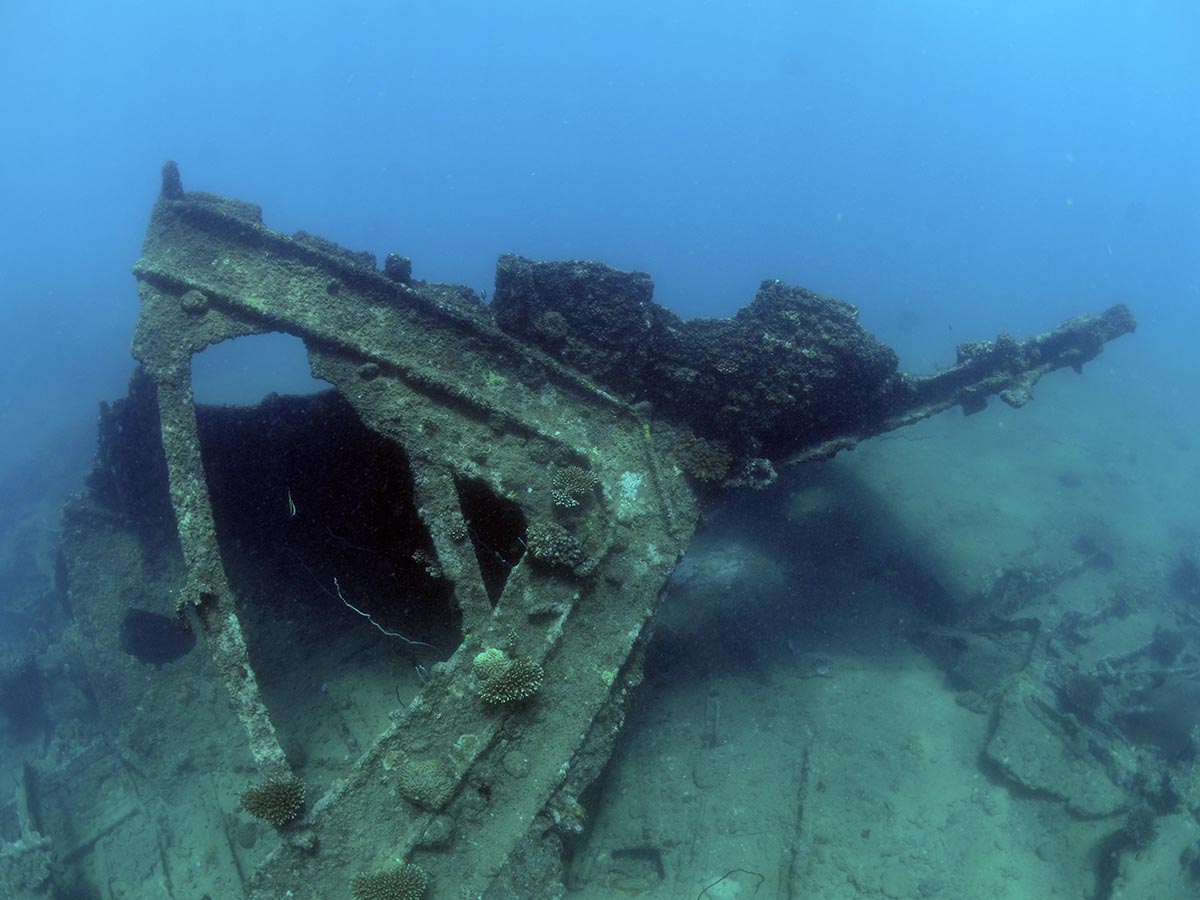
Since there are four wrecks found within the vicinity of one square kilometer of the said location, it has first been difficult to separately identify each ship. Hence, Mr. Darshana Jayawardene, who has made a publication on the sunk ships in Sri Lanka, has identified this place as ‘The Graveyard of Shipwrecks’. However, further investigations carried out by the Maritime Archaeology Unit of Galle (MAU) could identify the longest wreck as SS Gladys Moller (125m) and the second-longest as the SS Amarillys (108m). Both the other two wrecks found in the close vicinity were less than 100m in length. Out of the two, one wreck was 94m long and 11m wide, and the MAU research team could clearly identify the three boilers (one broken), propeller and the shaft of the wreck as well. The bow (front) section is broken from the main body and titled aside. Further, this wreck was recognized as the oldest and the most dilapidated one among that wreck accumulation. Since the data were much closer to the aforesaid fact sheet data, it has been now confirmed that this wreck is the British Sail and Steam Cargo ship, SS Clan Lamont.
builder: Stephen & Sons Ltd. - Alexander Stephen, Glasgow owner: Clan Line Steamers Ltd. - Cayzer, Irvine & Co Ltd, London
date built: 1879 nationality: britishtype: cargo ship propulsion: sail and steam
tonnage: 2091 grt dimensions: 93.2 x 10.6 x 7.4 m
engine: 1 x 2 cyl. compound, single shaft, 1 screw, 2 masts. Re-engined in 1889 , 1 x 3-cyl. triple expansion engine, single shaft, 1 screw
cause lost: ran aground (wrecked) date lost: 03/05/1891
Media gallery
·
Location
District: Batticaloa
Province: Eastern
Depth profile
5–8 m
Protection & status
- Access
- None
- Legal status
- None
Vessel chronology
1891
Year sunk
1879 – 1891
Time period estimate
References & publications
- Jayawadena, D. (2016) Ghosts of the Deep - Diving the shipwrecks of Sri Lanka, Vijitha Yapa Publications, Colombo, pp.198-205, 308-309.
- https://www.wrecksite.eu/wreck.aspx?139525 - 2019.06.23
Related shipwrecks
.jpg)
15 Km west Of Colombo
SS Worcestershire
Bamba Wisi Haye Nawa
SL/W/COLO/M/07
- Period
- 1 st World War
- District
- Colombo
- Depth
- 50–60 m
.jpg)
17 Km west of Colombo
SS Perseus
Athnagulpita Nava
SL/W/COLO/M/15
- Period
- 1 st World War
- District
- Colombo
- Depth
- 35–40 m
.JPG)
06 km West of Negombo
Musgrave (1885)?
Negombo Shallow Wreck
SL/W/NEGO/M/25
- Period
- Colonial - British
- District
- Gampaha
- Depth
- 8–11 m
.JPG)
NSD-0039
SS Ava
Irakkandi Wreck
SL/E/IRAK/M/01
- Period
- Colonial - British
- District
- Trincomalee
- Depth
- 6–9 m